






Key Takeaway:
- Antifreeze are chemical compounds that keep the water in your car’s cooling system from freezing blend
- Coolant is a half-and-half mix of antifreeze and water.
- IAT, OAT, and HOAT are some general types of vehicle coolants.
- Maintaining your coolant levels ensures your engine is saved from any potential freezing or overheating.
Your car fluids are as important as any other component. They keep your vehicle running at its optimum and ensure that your engine doesn’t run into any problems. One such significant car fluid is your car coolant, or what some people know as antifreeze. However, both have their respective similarities and differences.
York Dodge brings you this essential guide to explore these distinctions and similarities. Let’s begin.
What’s the Difference Between Antifreeze and Coolant
In purely technical terms, they’re not so different, but if you want to ask, “Can we use antifreeze instead of coolant?” the answer is a resounding no. Let’s explore the antifreeze vs. coolant debate in more detail and find out exactly what each does.
Antifreeze
Antifreeze compounds are essentially used for lowering the freezing point of water-based coolant mixtures. This property helps keep your car’s engine from freezing during winter. In addition, antifreeze also raises the boiling point of the coolant, which helps to prevent overheating during summer.
Coolant
On the other hand, your car’s coolant is responsible for both cooling and heating. Its job is to transfer heat away from engine parts that generate a lot of heat, like the cylinder head and exhaust manifold. In winter, coolant also helps to heat the engine faster so that it reaches its optimal operating temperature sooner.
The interesting thing is that coolant is a diluted solution of antifreeze and water. The antifreeze is added to the coolant to lower its freezing point, while the water is added to raise the coolant’s boiling point.
Similarities Between Antifreeze and Coolant
Now that we’ve covered the basics of antifreeze and coolant let’s discuss some similarities.
For starters, both antifreeze and coolant typically comprise ethylene glycol or propylene glycol. In fact, most antifreeze on the market today are made from propylene glycol because it’s less toxic than its predecessor.
Another similarity between antifreeze and coolant is their rust and corrosion inhibitors. These additives prevent rust and corrosion and save your engine from extensive damage in the long run.
Let’s look at some of the major types of antifreeze and coolant on the market:
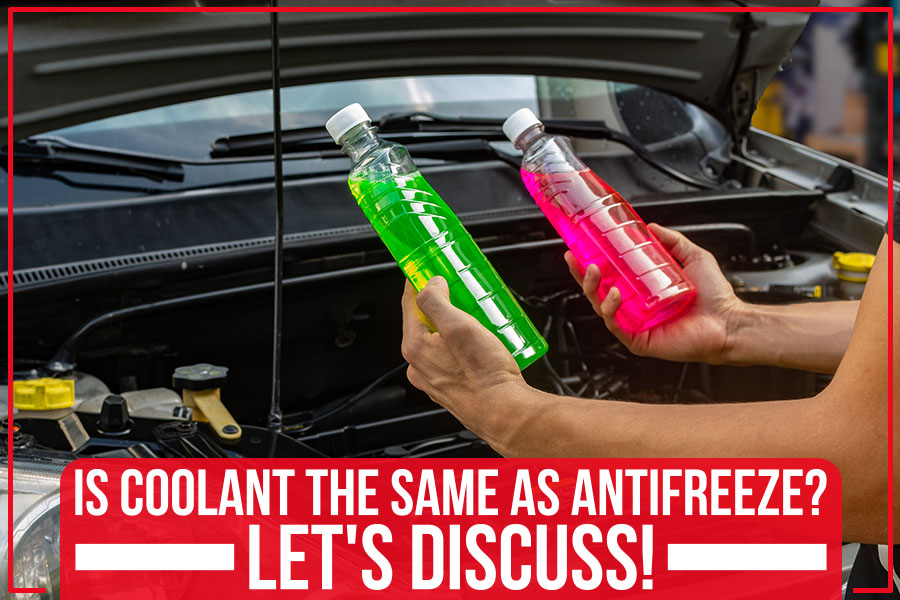
- Ethylene glycol antifreeze: This is the most common type of antifreeze and coolant on the market. It consists of ethylene glycol and typically comes in a green or blue color.
- Propylene glycol antifreeze: Unlike ethylene glycol antifreeze, propylene glycol coolant is non-toxic. It’s also biodegradable, making it a safer choice for the environment.
- IAT coolant: IAT coolant is made chiefly from ethylene glycol (could also use PG) and is rust famous for its rust-resistant properties. The difference in IAT coolant from others comes from the additives used in the coolant.
- OAT coolant: OAT coolant is made from ethylene or propylene glycol and typically comes in red, orange, or yellow. It’s known for its long lifespan and ability to withstand high temperatures.
- HOAT coolant: Unlike other coolants, HOAT coolant is made from a mix of ethylene and propylene glycol. This kind of coolant combines the benefits of both IAT and OAT coolants. It’s also yellow but typically has a greenish tinge to it.
What Happens When Your Car Has Low Coolant Levels?
1. The engine overheats.
Since the idea of having antifreeze is to keep your engine cool, it’s no surprise that an overheated engine is one of the main effects of low coolant levels.
2. The car’s cooling system cannot adequately cool the engine.
When car owners come to us complaining about their vehicle overheating, low coolant levels are often the root of the problem. After all, not everyone can be a master at knowing how much antifreeze their car needs.
3. Coolant leaks result in low coolant levels.
Sometimes we give all the emphasis to oil change and maintenance and often push the idea of antifreeze to the backburner. Coolant leaks often go unnoticed and can lead the coolant levels to drop significantly.
4. Your heater stops responding.
Low coolant levels can also be the reason your heater isn’t responding. The heater draws heat from the engine to warm up the cabin, so if the engine isn’t cooling properly, neither will your heater.
5. You face recurrent engine issues.
An engine that is not adequately cooled will face frequent issues. If you notice your engine sputtering or going through oil quicker than usual, it might be time to top-up your coolant levels.
Tips For Checking Your Coolant Levels:
– Check your car’s coolant levels at least once a month.
Despite what you might see in commercials, antifreeze does not last forever. Over time, it will break down and become less effective. Combine this with a leaking situation, and you have a recipe for disaster. So make sure you’re checking your coolant levels regularly.
– You must check your car’s radiator and cooling system for leaks.
As a collateral measure, you should also check for antifreeze leaking from your car. If you see a green liquid (that’s not water) on the ground where you park your car, it’s likely antifreeze.
– A coolant flush may be necessary.
Sometimes, there’s a need for antifreeze replacement. This is called a coolant flush. Your mechanic will remove the fluid from the system and replace it with a fresh mixture of water and antifreeze. Repeating this every few years is recommended to prevent rust and corrosion in the system.
– The antifreeze/coolant mixture should be 50/50.
The coolant in your car should be a 50/50 mix of antifreeze and water. The balance is needed to ensure the coolant can do its job in hot and cold weather.
Consider Professional Car Service in Prescott, AZ!
The benefits of regular car service are not just restricted to oil changes and antifreeze top-ups. Getting your car serviced on time is always advisable to avoid any significant issues and expensive repairs down the line. Speaking of which, York Dodge can help you with any auto service.
By entrusting your car to a professional dealership service center like ours, you can be assured that your car is in good hands. We will check all the fluid levels, brakes, and tires during the process. We offer two maintenance packages:
- 5000 miles or six months
- 15000 miles or twelve months
Avail of our service to keep your car running like new! Make an appointment today!
Connect with us

